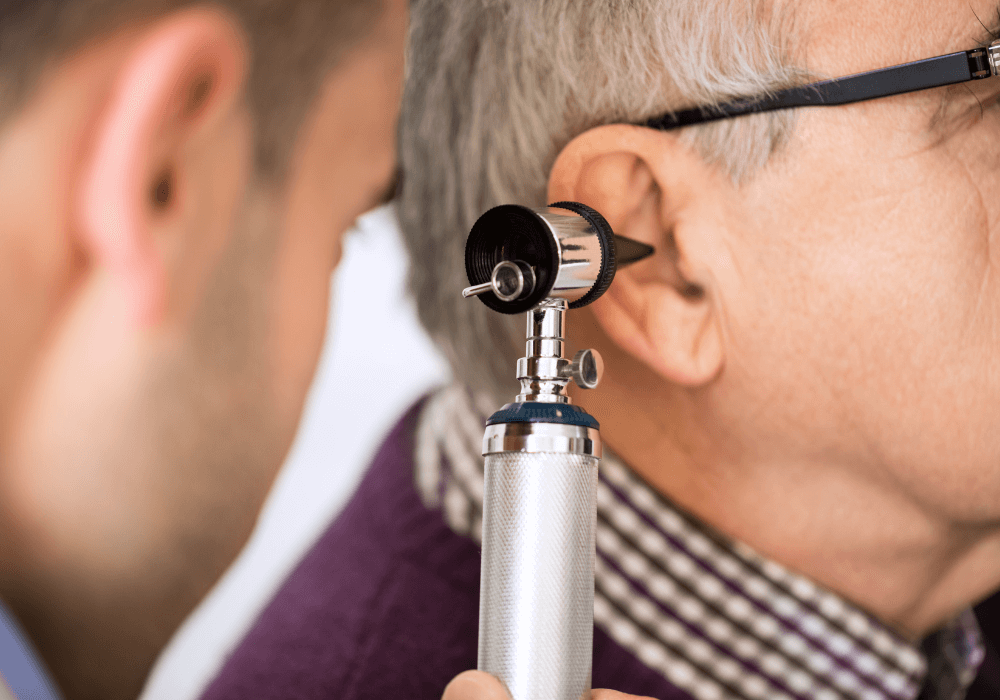
Ears & Hearing / Patient guide
Hearing Aids in Wesley Chapel & Trinity, FL
Did you know that in the United States hearing loss is one of America’s leading disabilities?
It affects 12% of all Americans and their ability to understand normal speech. For those age 65 or older that ratio can be 1 in 3. Noise is one of the leading causes of hearing loss.
If you live or work in the Trinity, Florida, area, you can consider Scotch Institute of Ear Nose & Throat to be your go-to source for hearing aids and advanced audiology services.
Individuals who visit Scotch Institute of ENT for hearing aids benefit from the expertise of both otolaryngologists and audiologists. Unlike retail centers that simply sell hearing aids at a counter, our practice first provides each patient with a thorough medical evaluation to rule out treatable causes of hearing loss, such as ear infections, ear wax buildup, and tumors.
If a patient is a candidate for a hearing aid, we’ll provide a personalized hearing evaluation and suggest devices that will best meet his or her unique needs.
Understanding your health
How Do I Know If I Need A Hearing Aid?
There are many signs that you or a family member may notice that could indicate difficulty hearing.
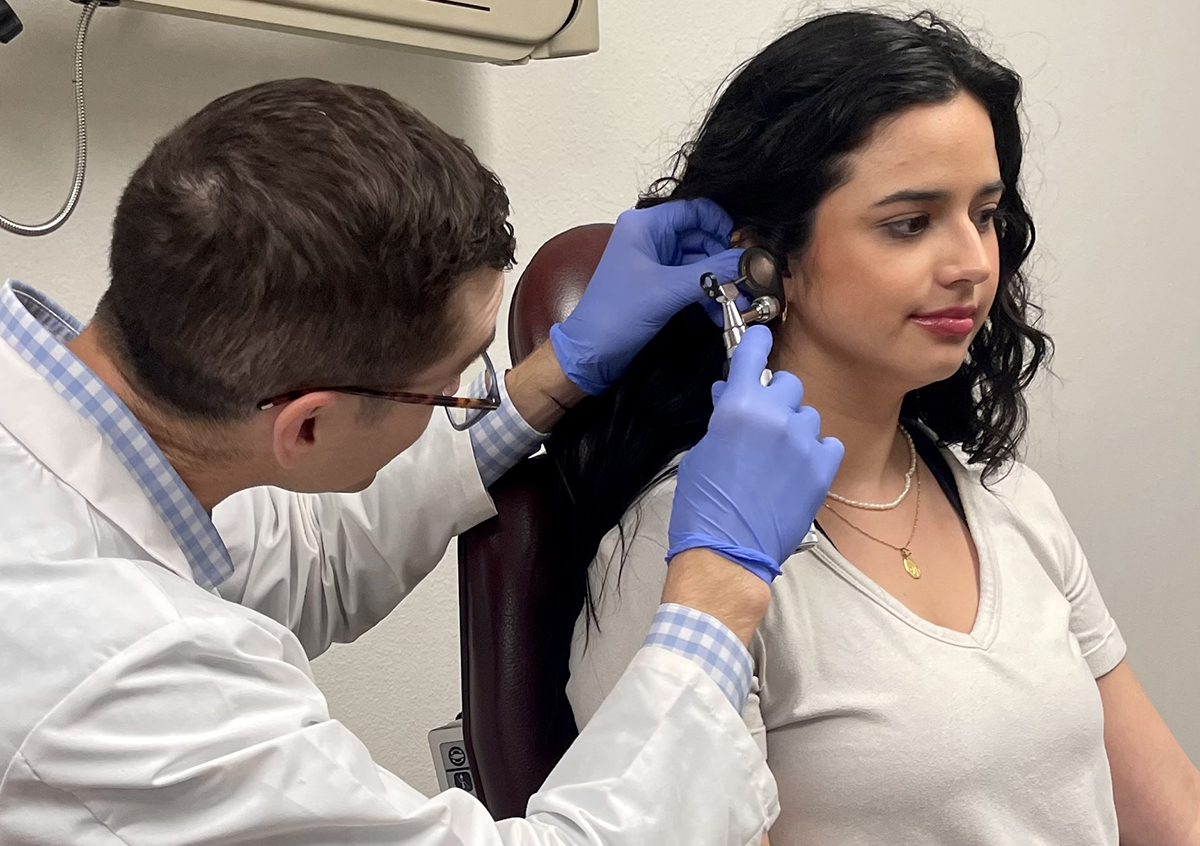
The first step in determining whether you have a hearing loss is to have a hearing evaluation by our audiologists and/or a medical exam by our ENT physicians. Hearing problems can range from ear wax impactions that obstruct hearing and are simply removed in the office by the physician, to more complex diagnoses.
If it is determined that you do have hearing loss and it cannot be treated by medical or surgical intervention, then hearing aids may be an option for you. A hearing aid evaluation is a free informational session with our audiologist. It lasts approximately one hour and is an opportunity for you and our audiologist to work together to determine which hearing aid would be the best fit for your lifestyle. During this visit, realistic expectations, styles of hearing aids, technology and features of hearing aids, cost of hearing aids,and your listening needs will be discussed. You may have a pair of hearing aids demonstrated to you in the office. If you choose to order a model that requires a custom fit, an impression of your ear will be taken on this visit.
The people
behind your care.
At a glance
What Are Some Different Types And Styles Of Hearing Aids?
- Tiny, completely in the canal
- Behind the ear aids
- Mini hearing aids
- Receiver in the canal aids
- CROS style
Understanding your health
Connection to your cell phone
Hearing aids have Bluetooth technology, and this allows them to be paired or connected to most smart phones. This gives patients the ability to make hearing aid adjustments on their own without having to make an appointment with our office.
Understanding your health
Do I Receive Follow Up Care?
At Scotch Institute of Ear Nose & Throat, your hearing aid follow-up visits are covered in the cost of the hearing aids for the duration of your warranty period and we can assist you with your aids as long as you own them. You will have a minimum of four visits with your audiologist. The first visit is the hearing aid evaluation. At your second visit, you will be custom fit with your hearing aids and you will learn how to use and care for them. During your 30-day trial period, you will visit with your audiologist twice to check your progress and make any necessary adjustments. After this time we are still available to you for any adjustments or issues with your aids!
Understanding your health
I Have An Older Aid I Purchased Somewhere Else
If you did not purchase your hearing aids through Scotch Institute of Ear Nose & Throat but would like to have your hearing aids serviced or have a hearing aid repair, please schedule an appointment with our audiologist by calling (813) 994-8900 to review your options for repair or reprogramming. We would be happy to assist you with most brands and styles.
It is recommended that you have your hearing aids checked and cleaned annually by an audiologist to prevent your hearing aid(s) from breaking down and to help ensure the longevity of your aid(s). Often over time, as your hearing changes or as you get more used to your hearing aid(s), the aid(s) will need to be adjusted to best suit your hearing needs. Our audiologists can make adjustments on almost any brand of hearing aid(s), even if you were not fit with your hearing aid(s) at our office.
At a glance
What is a CROS hearing aid?
A CROS (Contralateral Routing of Signal) hearing aid is designed for people who have normal hearing in one ear and little to no hearing in the other ear. The purpose of a CROS hearing aid is to help you hear sounds coming from the side that can’t hear, and sending those sounds to your better ear.
Here’s how it works:
- The CROS system includes two devices. One device is placed on your ear with little or no hearing, and it picks up sounds from that side.
- This sound is then wirelessly transmitted to the second device, which is worn on your better-hearing ear.
- The better ear hears the sound, allowing you to detect sounds from all around you, not just from your good ear’s side.
This system is particularly useful in situations where sound comes from different directions, like in a conversation or in a busy environment. The CROS hearing aid helps balance your hearing experience, making it easier to understand speech and stay aware of your surroundings.
Understanding your health
How Hearing Aids Give You A Great Return On Your Investment
If you’re one of the nearly 40 million Americans who suffer with hearing loss, maybe it’s time to consider investing in your hearing health.
Research shows that the rewards can be substantial. In fact, identifying and addressing hearing loss has been shown to positively influence virtually every aspect of an individual’s life, helping people personally, professionally and even financially.
New technological advances have revolutionized hearing aids in recent years. Today’s hearing aids can automatically adjust to all kinds of sound environments and filter out noise. Many are virtually invisible, sitting discreetly and comfortably inside the ear canal. Some are even waterproof, and others are rechargeable. Best of all, many are wireless, so you can stream sound from smartphones, home entertainment systems and other electronics directly into your hearing aid(s) at volumes just right for you.
When it comes to the purchase of personal items that enhance your life, there’s more than one way to measure value. Here are six ways that investing in professionally fitted hearing aids—if recommended by a hearing care professional following a comprehensive hearing evaluation—could bring you a greater return on your investment than you ever imagined.
Understanding your health
Return On Your Investment
Unleash your earning potential.
Using hearing aids reduced the risk of income loss by 90-100 percent for those with milder hearing loss, and from 65-77 percent for those with severe to moderate hearing loss, according to a Better Hearing Institute (BHI) study. People with untreated hearing loss lost as much as $30,000 in income annually, the study showed.
Maintain your cognitive function.
Research shows a link between hearing loss and dementia, leading experts to believe that interventions, like hearing aids, could potentially delay or prevent dementia. Research is ongoing.
Keep you on your feet.
A Johns Hopkins study showed that people in middle age (40-69) with even just mild hearing loss were nearly three times more likely to have a history of falling. The intensive listening effort demanded by unaddressed hearing loss may take cognitive resources away from what is needed for balance and gait, experts have suggested.
Relieve stress and lift your mood.
When people with hearing loss use hearing aids, many feel more in control of their lives and less self-critical, BHI research shows. One study found that the majority of people with mild and severe hearing loss felt better about themselves and life overall as a result of using hearing aids.
Tame that ringing in your ears.
Hearing aids can help reduce the prominence of tinnitus by amplifying background sound. Just taking the focus off the tinnitus can provide relief for many people. Hearing aids also reduce the stress associated with intensive listening, which alone can help relieve tinnitus symptoms.
Strengthen your relationships.
Research shows that using hearing aids can help improve interpersonal relationships. In one BHI study of people with hearing loss, more than half of the respondents said using hearing aids improved their relationships at home, their social lives and their ability to join in groups. Many even saw improvements in their romantic lives.
Addressing hearing loss really is a smart buying decision.